The Markos Synodinos Award
For Literary Service to Greece
This award is not submitted for. It is not voted on. It is given. Given annually by Rania Stone and Jonas Saul to a writer whose work demonstrates the same quality that Markos Synodinos embodied throughout his life — a profound, earned, and generous engagement with Greece.
Its landscape. Its mythology. Its philosophy. Its people. And the ancient belief that stories are how civilizations understand themselves.
It is presented last of all at the Homer Awards gala. Because some things should be saved for the end.
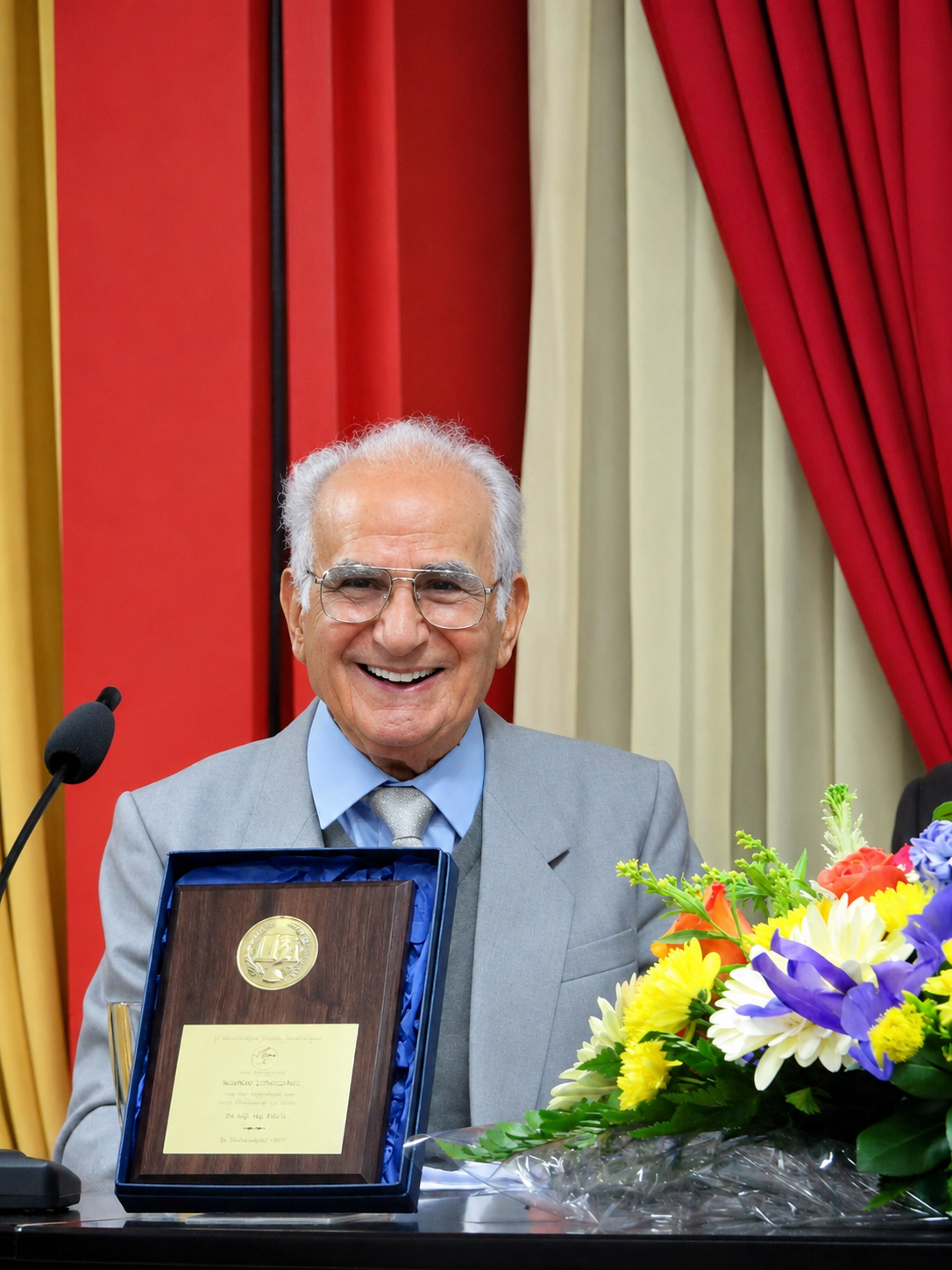
Markos Synodinos 1933 – 2021
Markos Synodinos was born in 1933 on Amorgos, a small island in the Aegean that has been inhabited since antiquity and has never stopped producing people of unusual depth.
The Second World War marked him decisively. He spent much of his life searching for its causes — a search that took him to sea. Work on merchant ships put him in contact with people of every background, and it was there that he began studying the differences between them, and the truths that held underneath those differences. He never stopped searching. Restless by nature, he pursued truth through lived experience, observation, and hard questioning, writing for newspapers and magazines along the way and producing a body of historical and pacifist studies.
He published eighteen books over the course of his life, mostly poetry, with some prose works: Ημέρα και νύχτα (Day and Night, 1989) and Στον κύκλο της αλήθειας. His first collection, Ο λυράρης βασιλιάς (The Lyre-Playing King, 1986), is an epic poem longer than Homer’s. It was followed by Άνοιξη η μεγάλη ελπίδα (1987), Η ρεματιά (1993), Μούσα του καιρού μας (1994) and its sequel Μούσα του καιρού μας ΙΙ (2003), Ύμνος στη λευτεριά (1995), Ολύμπιοι θεοί, μούσες, άνθρωποι (1998), Στο σκαλοπάτι του αγνώστου (2004), Ποίηση από το απέραντο πέλαγος (2005), Φιλοσοφία στη σκιά του πολέμου (2006), Τρομαγμένη πόλη (2008), Αλαργινός περίπλους (2011), and Η μοίρα της μεγάλης προόδου (2011). His catalogue also includes Για την λευτεριά της Κρήτης (For the Freedom of Crete), Λόγος, Βιολί και Λύρα (Word, Violin and Lyre), and the two-part Ερευνώντας την αλήθεια: Γνώθι σε αυτόν (Researching the Truth: Know Thyself).
Across both poetry and prose, the same anguish runs through his work: a longing for peace on earth and a more just society. Torrential in his inspiration, lyrical and epic at once, he wrote in the tradition of the great classical poets — the ones whose messages don’t age, because they’re built on truths that don’t move.
He was a member of the Society of Greek Writers, a founding member of the Aristotelian Circle of Athens, and a founding member of the Philological Hearth of Piraeus. His honors include a distinction in the Nikos Kavvadias competition of the Ministry of Merchant Marine, the Philological Hearth of Piraeus award, the Union of Aegialites award, and an honor diploma from the 2001 Spiritual Olympiad. In 2000, the Academy of Letters, Arts and Sciences “Trinacria” of Messina, Sicily, awarded him an honorary academic diploma.
His works are held in libraries beyond Greece. Many have been set to music.
He passed away in March 2021 at the age of 88, leaving behind a body of work that his island, Amorgos, mourned as a collective loss.
A personal note
This award is given annually in his name by his daughter, Rania Stone. It is presented to a writer whose work Markos Synodinos would have wanted to honor — someone who has engaged with Greece not as a backdrop or a postcard, but as a living thing with a soul.
The category is wide because Markos Synodinos was wide. Any writer — published or not, thriller or literary, Greek or international — whose work demonstrates that quality is eligible.
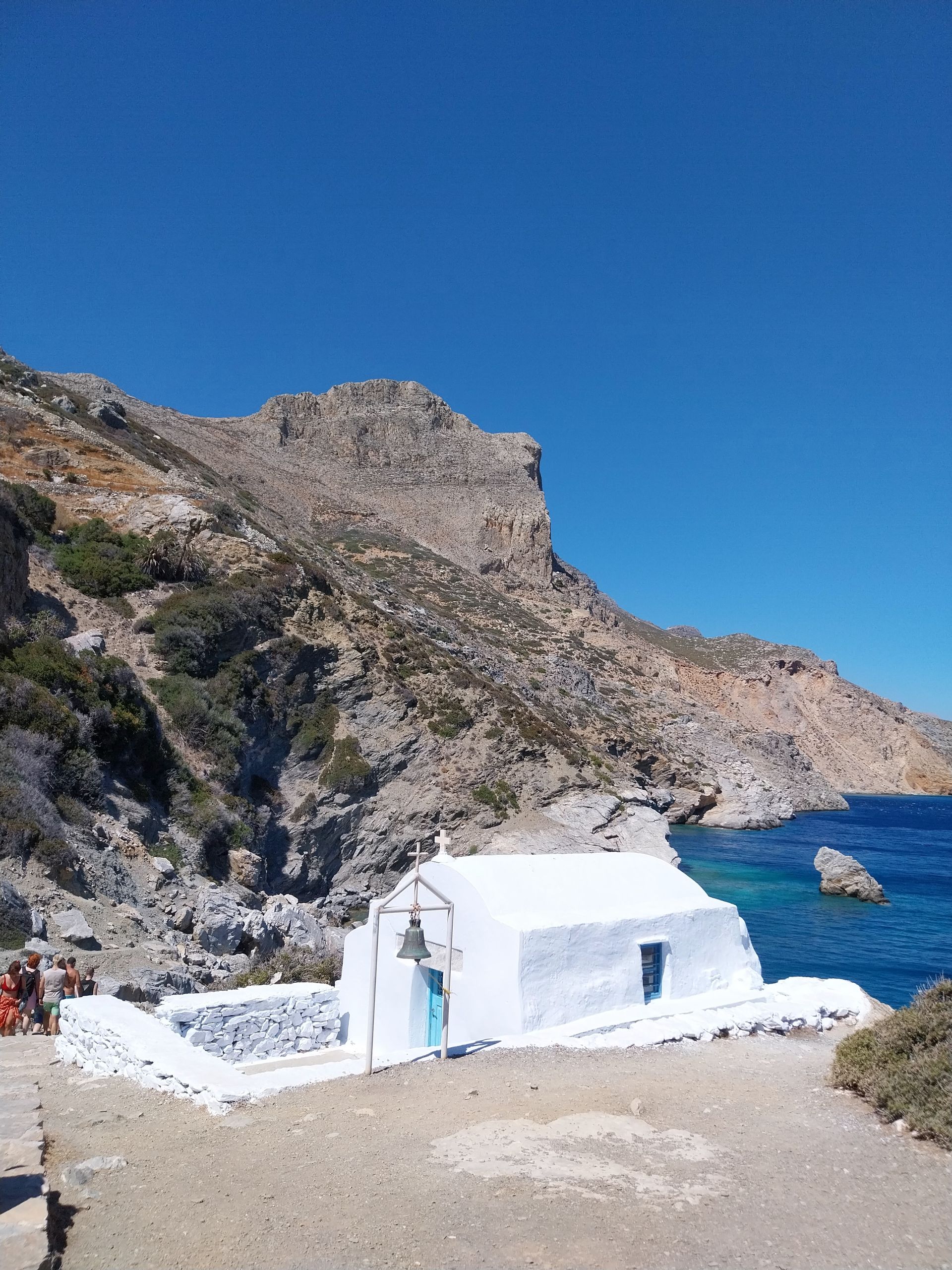
AMORGOS
Amorgos is the easternmost island of the Cyclades — remote, ancient, and largely unchanged by the tourism that has transformed much of the Aegean.
It is an island of extraordinary light and extraordinary silence. The kind of place that produces poets. The kind of place that produces people who believe that words matter.
Markos Synodinos was born here and carried it with him always.
THE HOME
ALIMOS
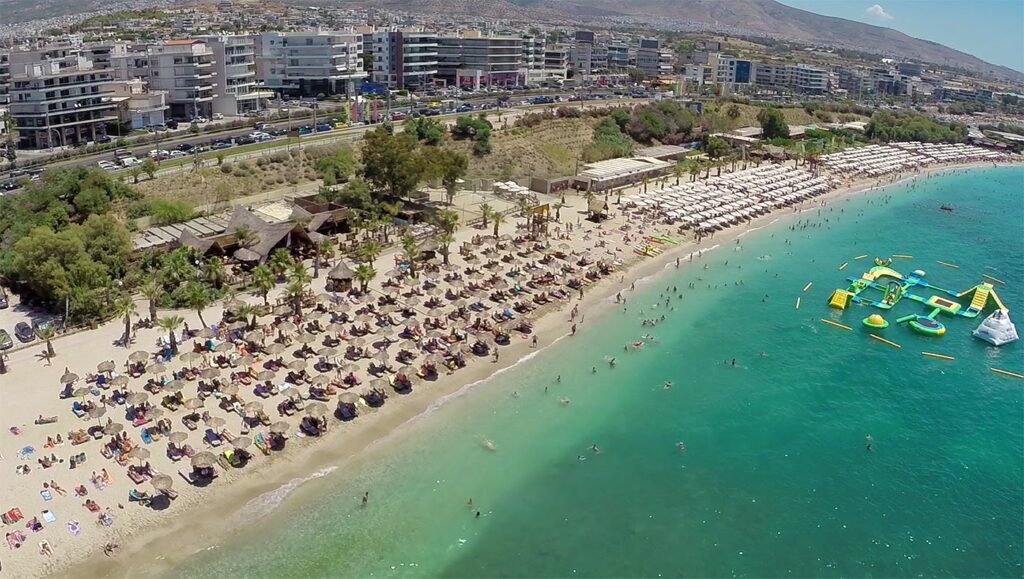
Markos Synodinos was born on Amorgos, but Alimos is where he built a life. He lived there for thirty-five years — long enough to belong to it, long enough for it to belong to him.
It’s a fitting home for a historian’s instincts. Alimos is the birthplace of Thucydides, one of the two great historians whose search for truth Markos Synodinos spent his own life continuing.
The artwork
Anton Raphael Mengs (1728–1779) Helios as Personification of Midday Oil on canvas · Public domain Helios — the all-seeing god who crossed the sky each day and witnessed everything that happened on Earth and in the heavens.
From his chariot above the Aegean, he would have crossed the sky over Amorgos every day of Markos Synodinos’s life.